Choosing the best Hydrophobic Vent for 2026 is not simply a search for one top-rated product. The right choice depends on exposure, airflow needs, enclosure design, and maintenance limits. A vent mounted on an outdoor sensor may face wind-driven rain, dust, and repeated temperature swings. A unit inside a compact electronics housing may need a different balance. Small details matter. Membrane material, effective area, seal geometry, and installation orientation can all shape performance. Product names alone tell little.
This guide examines how to compare vents using practical criteria: water resistance, airflow, pressure equalization, durability, and fit. It also considers the documentation behind each claim, including test conditions and installation guidance. Those details help separate useful evidence from broad marketing language. A high rating on paper may not predict performance in every enclosure, so testing a shortlisted vent in its intended application remains important. There is no universal winner. That is easy to say, but harder to apply when specifications are incomplete or designs change between product versions. The comparisons ahead aim to clarify the trade-offs, highlight what buyers should verify, and make the final selection more dependable.
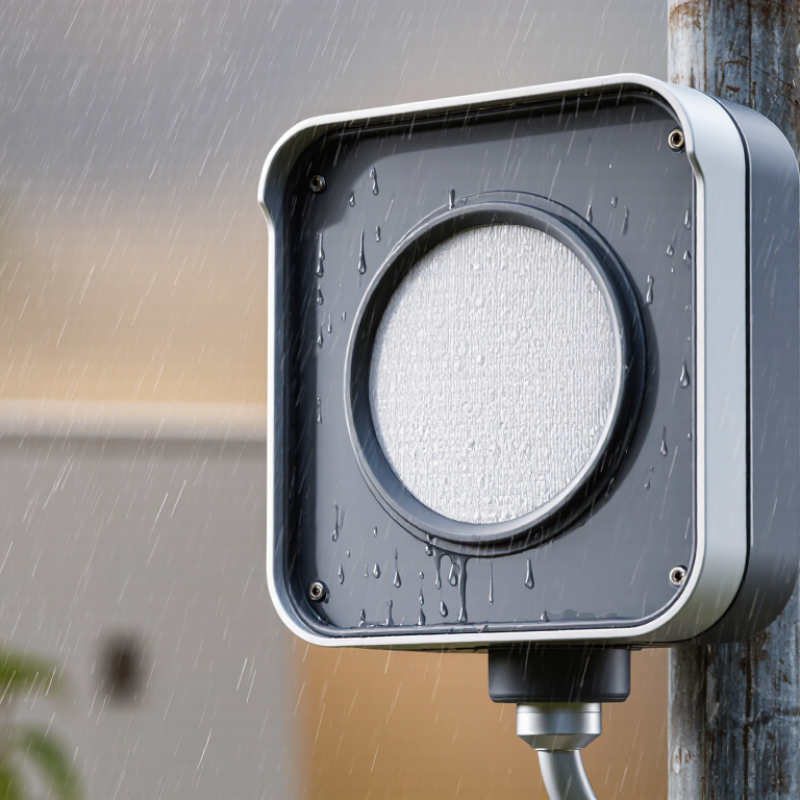
A hydrophobic vent is a breathable barrier that resists liquid water. It commonly contains a microporous membrane with water-repelling surfaces. Air moves through its pores, helping equalize pressure between an enclosure and the surrounding air. Water does not pass as easily. That’s the basic idea.
Inside a sealed housing, temperature changes can create pressure differences. A device warming in sunlight may pull air inward as it cools. A vent allows that exchange while helping keep rain and splashes out. Its protection depends on pore structure, membrane condition, and water pressure; it is not an unlimited shield. Small detail, big impact.
When choosing a vent, match its airflow and water-entry performance to the enclosure’s needs. Consider temperature, cleaning exposure, and likely contact with oils or dust, since contamination may reduce performance. Installation matters, too: a damaged seal can let water bypass the membrane entirely. Check the specified test conditions rather than assuming every hydrophobic vent offers the same protection. A vent helps manage pressure and moisture risk, but it cannot replace sound enclosure design.
A hydrophobic vent must block liquid water while allowing air or gas to pass. That balance depends on pore structure, membrane material, and operating conditions. A smaller pore can improve resistance to water entry, but may restrict airflow. There is no universal winner. The right choice depends on the enclosure, pressure changes, and exposure it will face.
Check water-entry pressure alongside airflow at the pressure difference your device actually experiences. A vent that performs well in a lab may behave differently when dust, oils, or cleaning fluids reach its surface. Chemical compatibility matters. So does temperature: heat and cold can affect membrane performance and the surrounding seal. Ask for test conditions, not just a single headline rating.
Details matter.
Installation deserves equal attention. A membrane can be highly water-resistant, yet a poor bond or uneven surface may create a leak path around it. Look for clear guidance on mounting, usable vent area, and durability testing. Then test the assembled product under realistic conditions, including repeated pressure changes and moisture exposure. It is easy to focus on the membrane alone. That is a mistake I would revisit during any design review. A reliable selection comes from matching documented performance to the actual use case, while leaving room for uncertainty where test data is limited.
What Is the Best Hydrophobic Vent for 2026?
Common Hydrophobic Vent Types and Their Applications
Hydrophobic vents allow air to pass while resisting liquid water under specified conditions. They help reduce pressure differences caused by heating, cooling, or altitude changes. That matters in sealed sensor housings, outdoor lights, and portable electronics. Without a vent, a small temperature swing can stress seals or pull moisture inside.
Adhesive-backed membrane vents suit flat enclosure walls and compact devices. They are quick to install, but the surface must be clean and smooth for reliable bonding. Snap-fit and threaded vent plugs work well on molded housings, control boxes, and vehicle electronics. They can be easier to replace. They also need enough mounting space. Small detail, big consequence.
The membrane material affects airflow, water resistance, and chemical compatibility. Expanded PTFE is common where steady air exchange and resistance to water are needed; some applications may require an oleophobic layer to resist oils. Sintered polymer vents offer a sturdy, porous structure for rugged assemblies, though airflow and water-entry performance vary by design. I would not choose by material name alone. Check the vent’s rated airflow, water-entry pressure, temperature range, and exposure to dust or cleaning fluids. A chart helps, but real enclosure testing still matters. Conditions in the field are rarely perfect.
Common hydrophobic vent types and their typical applications
Scores are qualitative typical-fit ratings from 1 (less common fit) to 5 (common fit), not measured performance data. ePTFE is widely used for breathable water-resistant enclosure venting; hydrophobic polypropylene is common in cost-sensitive venting and filtration; hydrophobic PVDF is often selected where chemical compatibility matters. Check the specific vent’s water-entry pressure, airflow, chemical compatibility, and operating conditions before selection.
What Is the Best Hydrophobic Vent for 2026?
How to Compare Vents for Different Operating Conditions
Choosing a hydrophobic vent starts with the operating profile, not a headline airflow number. Outdoor enclosures may face rain, pressure cycling, dust, and condensation. Battery cabinets may need controlled gas release and splash resistance. Compare airflow at the expected pressure differential, then check water-entry pressure, membrane structure, and sealing geometry. ASTM D737-18(2023) describes a repeatable air-permeability test for fabrics. Results are comparable only when test area, pressure, and conditioning match. Small differences matter.
For liquid exposure, IEC 60529 defines IPX7 testing for temporary immersion, typically 1 m for 30 minutes, subject to enclosure dimensions. That rating evaluates the assembled enclosure, not a loose vent membrane. Request vent-level airflow and water-entry data across relevant temperatures, plus dust and chemical compatibility results. Review performance after thermal cycling; adhesive aging or salt deposits may change results. One caveat: lab tests cannot reproduce every installation. Check mounting direction, drainage paths, and pressure spikes from rapid heating. A stated airflow figure means little without its test conditions. And service access is easy to overlook.
What Is the Best Hydrophobic Vent for 2026?
Choosing the best hydrophobic vent starts with the conditions it must handle, not a headline specification. Will it face rain, washdown, condensation, dust, or changing pressure? A vent that blocks liquid water may still restrict airflow too much for a sealed enclosure. Define the enclosure’s pressure-equalization needs and likely exposure before comparing options.
Check water-entry pressure, airflow, membrane area, and operating temperature. Then confirm that the membrane and housing tolerate nearby oils, cleaning agents, and other expected chemicals. Fit matters, too: thread size, mounting surface, gasket design, and installation position can affect sealing. Small details count. A tilted vent may drain differently from one mounted flat.
Ask suppliers for test methods and performance data, not just broad claims. Where possible, evaluate samples in the actual enclosure and repeat checks after temperature changes or exposure to dust. Results from a clean laboratory may not match a cramped device in the field. There is no perfect choice; higher water resistance can mean lower airflow, and the trade-off deserves attention. I would not select a vent from one number alone. Review service life, maintenance access, and replacement needs before settling on a design.
The best choice depends on the enclosure, required airflow, exposure, and installation method. Use this comparison to identify a suitable vent type and verify performance against the application’s test requirements.
| Vent type or feature | Typical strengths | Points to verify | Often suited to | Selection guidance |
|---|---|---|---|---|
| Expanded PTFE (ePTFE) membrane vent | Allows air and water vapor to pass while resisting liquid water when correctly specified and installed. | Airflow at the stated pressure difference, water-entry performance, membrane area, chemical compatibility, and operating temperature. | Outdoor electronics, sensor housings, lighting enclosures, and other sealed equipment that needs pressure equalization. | A common starting point for general-purpose enclosure venting. Select from measured application requirements rather than material name alone. |
| Hydrophobic porous-polymer vent | Can provide a defined porous structure and useful liquid-water resistance in a compact vent design. | Confirm that the specific grade is hydrophobic, and check airflow, water-entry pressure, particle protection, and fluid compatibility. | Compact housings and applications where the vent material and geometry are matched to a known environment. | Compare certified data for the finished vent; properties vary with pore structure, thickness, and construction. |
| Adhesive-backed membrane vent | Can be applied to a prepared enclosure surface without a threaded mounting port. | Adhesive compatibility with the enclosure, surface cleanliness, bond area, edge sealing, and resistance to aging or moisture. | Flat-panel housings and designs where a low-profile installation is preferred. | Use only on compatible, properly prepared surfaces. The adhesive joint is part of the environmental seal. |
| Threaded or press-fit vent | Provides a mechanically retained installation and can be practical for a dedicated enclosure port. | Port dimensions, retention, gasket or sealing method, installation torque where specified, and enclosure-wall thickness. | Equipment designed with a molded, drilled, or machined vent opening. | Match the vent to the port design and follow the installation instructions; avoid relying on the membrane alone to seal the mounting interface. |
| High-airflow configuration | Can equalize pressure more quickly when the vent has adequate effective area and low airflow resistance. | Airflow test conditions, pressure differential, vent area, and the enclosure’s pressure-change rate. | Large enclosures or equipment exposed to rapid temperature and altitude changes. | Compare airflow measured at the same pressure differential. A larger vent may help, but the full enclosure design also affects equalization. |
| High water-entry-resistance configuration | Can better resist liquid-water penetration under the manufacturer’s stated test conditions. | Water-entry test method, pressure, duration, membrane condition, and whether the rating applies to the installed assembly. | Enclosures exposed to rain, splashing, or other defined water exposure. | Do not treat “hydrophobic” as a guarantee of immersion protection. Confirm the required rating and test the finished enclosure. |
| Chemically exposed configuration | May be available with materials selected for compatibility with particular chemicals or cleaning agents. | Compatibility of the membrane, housing, adhesive, seals, and any protective layers with the actual chemical and exposure conditions. | Industrial equipment, cleaning environments, or housings near process fluids. | Request material-compatibility data for the complete vent assembly; compatibility can differ by concentration, temperature, and exposure time. |
| Outdoor or UV-exposed configuration | May include materials or construction intended to withstand outdoor aging and weather exposure. | UV and weathering data, temperature range, drainage orientation, and protection from direct impact or blockage. | Outdoor instruments, remote monitoring equipment, and exposed electrical enclosures. | Check environmental test data and installation orientation. Keep the vent clear of dirt, paint, and standing water. |
| Fine-particle protection requirement | A vent can help limit dust entry while still allowing pressure equalization, depending on its construction and test rating. | Particle or ingress-protection test evidence, airflow after contamination, and any required downstream filtration. | Enclosures in dusty locations where pressure equalization is still needed. | Confirm the required enclosure-level ingress rating; a vent’s material description alone does not establish the rating of the assembled enclosure. |
| Replaceable or serviceable vent | Can simplify maintenance if the design allows inspection or replacement without damaging the enclosure. | Service procedure, replacement interval, resealing method, and whether performance is maintained after replacement. | Equipment expected to undergo scheduled inspection or field service. | Follow the specified service procedure and inspect for clogging, damage, or a compromised mounting seal. |
Practical selection checklist: Define the required airflow, water exposure, dust protection, temperature range, chemical exposure, and mounting method. Then compare test data measured under comparable conditions and validate the complete installed enclosure. Performance depends on the vent design, installation, and application; no single vent type is best for every use.