Skip to content

What Is the Best Steam Humidifier for HVAC in 2026?

Choosing the best steam humidifier for HVAC in 2026 is not just a matter of comparing tank sizes or price tags. The right unit must match your home’s heating system, duct layout, water quality, and moisture needs. Too little output may leave winter air uncomfortably dry. Too much can fog windows, dampen nearby surfaces, or strain poorly planned controls.

ASHRAE Fellow Dr. William Bahnfleth’s building-science work supports a useful takeaway, paraphrased here: “Humidity control should be considered as part of the whole building system.” That distinction matters. A steam humidifier HVAC installation adds moisture through heated steam, but safe, even distribution depends on proper sizing, placement, controls, and maintenance. A shiny product page cannot tell you whether a unit will fit your ductwork.

Details matter. Check the rated output, electrical requirements, water treatment guidance, and compatibility with your thermostat or humidistat. Look for clear service instructions, accessible replacement parts, and safeguards against excessive humidity. Ask an experienced HVAC contractor to assess the installation rather than guessing from square footage alone.

There is no universal winner. A compact home with straightforward ductwork may need a different model than a large house with several zones. And product specifications can be confusing. This guide compares leading options for 2026, explains what their features mean in everyday use, and highlights the trade-offs worth checking before you buy.
What Is the Best Steam Humidifier for HVAC in 2026?

How HVAC Steam Humidifiers Convert Water into Steam at 212°F

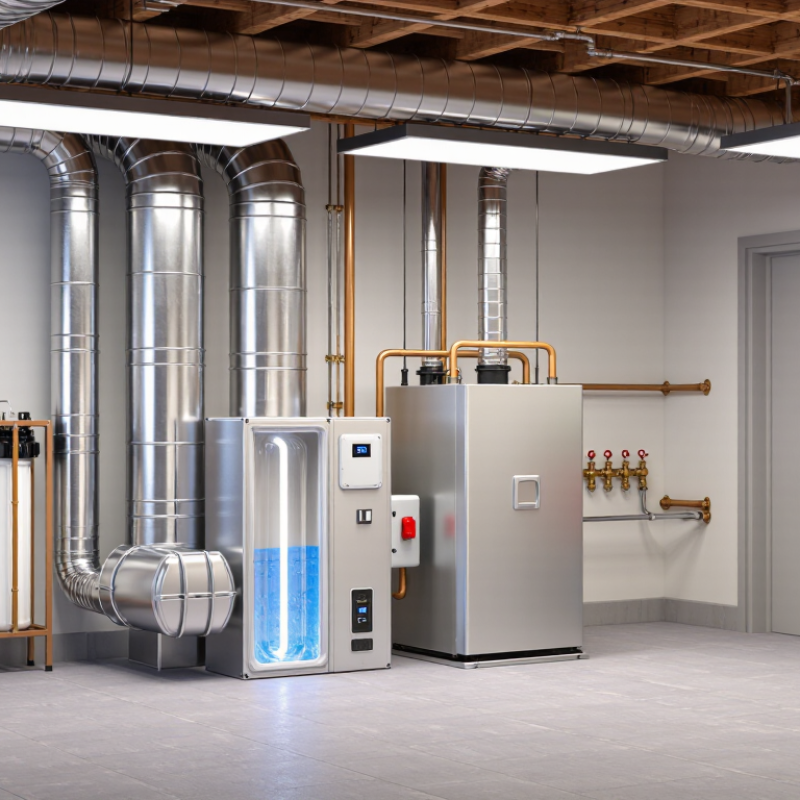
An HVAC steam humidifier heats water in a canister until it boils. At sea level, that happens at about 212°F (100°C). Altitude changes the boiling point, so the number is not universal. Electric elements or electrodes supply the heat, while controls add steam when the duct needs moisture. The vapor then mixes with moving air; it is not meant to send droplets through the vents. A warm duct and correctly placed humidity sensor help prevent condensation on cold surfaces.

The heat demand is substantial. NIST lists water’s vaporization energy near its boiling point at roughly 2,257 kilojoules per kilogram, or about 970 Btu per pound. ASHRAE’s 2024 Handbook—HVAC Systems and Equipment discusses steam humidifiers and their control in HVAC applications. That energy has to come from somewhere.

In practice, output capacity, electrical service, water quality, and maintenance matter as much as the advertised steam temperature. Mineral deposits can coat a canister and reduce performance; I would not assume a unit is “set and forget.”

The EPA advises keeping indoor relative humidity around 30–50 percent, while avoiding levels above 60 percent. A properly sized humidifier should use a humidity sensor and be commissioned for the home, rather than run continuously at maximum output.

How to Size Output: 4.5 × CFM × Humidity-Ratio Change ÷ 7,000

To size a steam humidifier, treat 4.5 × CFM × humidity-ratio change ÷ 7,000 as a moisture-load estimate in pounds per hour. The 4.5 factor comes from standard air at roughly 0.075 pounds per cubic foot, converted from minutes to hours. ASHRAE’s Handbook—Fundamentals (2021), in its psychrometrics material, provides the air-property basis for this conventional calculation. Here, humidity-ratio change must be expressed in grains of water per pound of dry air, not as a percentage or a decimal ratio.

For example, 500 CFM with a 30-grain-per-pound difference gives about 9.6 pounds of moisture per hour. Use the airflow that actually needs humidification, such as measured outdoor air plus a defensible infiltration estimate—not automatically the full recirculating blower rating. A cold-weather design condition matters: using mild-day humidity can undersize the unit, while an exaggerated airflow can inflate capacity. Check the home’s envelope, ventilation schedule, and target indoor conditions against the equipment data. Small inputs, big changes. I would recheck the grain difference before selecting a capacity; this estimate does not account for every duct leak or operating pattern.

Electrode, Resistance, or Gas-Fired: Comparing Three Steam Technologies

What Is the Best Steam Humidifier for HVAC in 2026?

Electrode, Resistance, or Gas-Fired: Comparing Three Steam Technologies

Choosing a steam humidifier starts with the building, not the heating element. Electrode models pass current through water to create steam. They can respond quickly to changing humidity demand, but their output depends on water conductivity. Hard or unusually treated water may affect operation and maintenance. Check local water conditions before choosing one.

Resistance units heat water with an electric element, much like a kettle. Their output is less dependent on water conductivity, and they can suit sites where electrical service is available. Scale still collects on hot surfaces. A technician may need to inspect the tank and element regularly. The access panel matters; a unit that is awkward to service can turn a routine check into a long afternoon.

Gas-fired models use a burner to heat water and may make sense in larger buildings with suitable gas service and venting. They can reduce reliance on electrical heating capacity, but installation is more involved.

There is no universal winner. Compare humidification load, utility capacity, water quality, venting, and maintenance access with an HVAC professional. I would not pick by output rating alone; the duct layout can make a seemingly powerful unit feel underwhelming.

How to Compare 2026 Units by Capacity, Controls, Power, and Maintenance

Compare capacity in pounds of steam per hour, not by home size alone. The ASHRAE Handbook—HVAC Systems and Equipment treats humidifier selection as a moisture-load calculation: outdoor air, ventilation rate, and indoor target all matter. A unit that is too small may run continuously on a cold, dry day. Too large can cycle often. Measure the duct and check the system’s design airflow.

Controls matter as much as output. Look for a humidity controller, an airflow interlock, and a high-limit duct sensor to reduce condensation risk. ASHRAE steam-property tables put water’s latent heat near 970 Btu per pound at atmospheric pressure. That is about 0.28 kW per pound per hour as a theoretical minimum; heating feedwater and equipment losses raise real input. Check voltage, phase, and circuit capacity before comparing operating costs. EIA’s Electric Power Monthly reports commercial electricity prices, which vary by region and over time.

Maintenance is the unglamorous test. Ask how the unit drains, handles mineral scale, and signals service; hard water can shorten service intervals. A removable steam canister may simplify cleaning, but replacement cost belongs in the comparison. Keep the drain visible and accessible. I would not trust a capacity chart without its stated water conditions and test method. Small details can change the answer.

Humidity Targets and Safety: EPA Advises Staying Below 60% RH

What Is the Best Steam Humidifier for HVAC in 2026?

For a whole-home HVAC system, the best steam humidifier is sized for the house and matched to its ductwork. A unit that produces too much moisture can leave windows wet and encourage mold growth. The U.S. Environmental Protection Agency advises keeping indoor relative humidity below 60%, ideally between 30% and 50%. A humidistat helps maintain that range, but readings can vary between rooms. Check bedrooms and cooler exterior walls, not just the hallway display.

Tips: Start near 30% RH in cold weather. Raise the setting gradually. If windows fog, lower it. Follow the installation and maintenance instructions, and ask a qualified HVAC professional to check duct compatibility and drainage.

Steam adds moisture quickly, so control and upkeep matter. Mineral deposits can build inside the unit, especially with hard water, and neglected components may affect performance. Look for clear cleaning guidance, accessible service parts, and automatic shutoff protections. Also consider operating costs and whether your electrical system can support the unit. There is no perfect setting for every home: outdoor temperature, insulation, and air leaks all change what feels comfortable. A small room hygrometer can reveal differences the central control misses.

What Is the Best Steam Humidifier for HVAC in 2026? - Humidity Targets and Safety: EPA Advises Staying Below 60% RH
Compare steam-humidifier features by your home’s needs. Actual capacity and installation requirements vary by system; use a qualified HVAC professional and the equipment manufacturer’s specifications when selecting and installing a unit.
Decision factor What to compare Practical guidance Safety or maintenance check
Indoor humidity target Humidistat range and control accuracy The U.S. EPA advises keeping indoor relative humidity below 60%; an often-cited preferred range is 30%–50% RH. Reduce the setpoint if windows or other surfaces show condensation. Avoid maintaining high humidity.
Output capacity Rated steam output, commonly listed in pounds per day or gallons per day Capacity should be selected for the home’s size, air leakage, climate, ventilation, and desired humidity—not floor area alone. One pound of water is about 0.12 U.S. gallons. Ask for a load assessment; an oversized unit can raise humidity faster than the home can safely absorb it.
Steam-generation method Electrode or resistive heating design, service parts, and water-quality requirements Both methods heat water to produce steam. The appropriate design depends on the installation, electrical supply, and the manufacturer’s permitted water conditions. Check required cleaning, replacement-part intervals, and whether the unit has automatic drain or flush functions.
Duct and system compatibility Approved duct orientation, airflow range, injection location, and absorption distance Steam must have adequate space to disperse before reaching bends, filters, dampers, or other obstructions. The required distance is model- and duct-dependent. Follow the installation manual and inspect for signs of duct condensation or water leakage.
Controls and interlocks Humidistat placement, airflow proving, and furnace or air-handler interlock A control system should operate humidification only under the conditions specified for the HVAC equipment and humidifier. Place room humidity sensors away from direct supply airflow, exterior doors, and local moisture sources.
Water, drainage, and upkeep Water supply limits, drain connection, cleaning access, and service alerts Mineral content and operating conditions affect scale and maintenance needs. Use only the water type and service procedure specified for the unit. Verify that the drain is installed as directed and that the unit can be safely isolated for service.
Electrical and scald protection Electrical requirements, enclosure, access, and fault protections Steam humidifiers use heated water and require suitable electrical service and installation clearances. Keep hot components and steam outlets inaccessible to children; installation and electrical work should follow local codes.
Reference: U.S. Environmental Protection Agency (EPA), indoor humidity and moisture-control guidance. Follow the current product manual and local building and electrical codes.