Skip to content

China Top Furnace Humidifier Suppliers for Global Buyers

Global buyers are examining China’s furnace humidifier suppliers more carefully. The reason is practical. Dry indoor air affects comfort, wood flooring, electronics, and respiratory conditions. The U.S. Environmental Protection Agency recommends maintaining indoor relative humidity between 30% and 50%. This range offers a useful reference for residential HVAC design and product testing.

Industry data also shows steady demand. Fortune Business Insights valued the global humidifier market at approximately USD 2.49 billion in 2023. Its report forecasts continued growth through 2032, driven by residential comfort, healthcare, and industrial climate control. This broader category includes portable, commercial, and furnace-mounted systems. Therefore, buyers should not treat every market statistic as furnace humidifier data. That distinction is easy to miss.

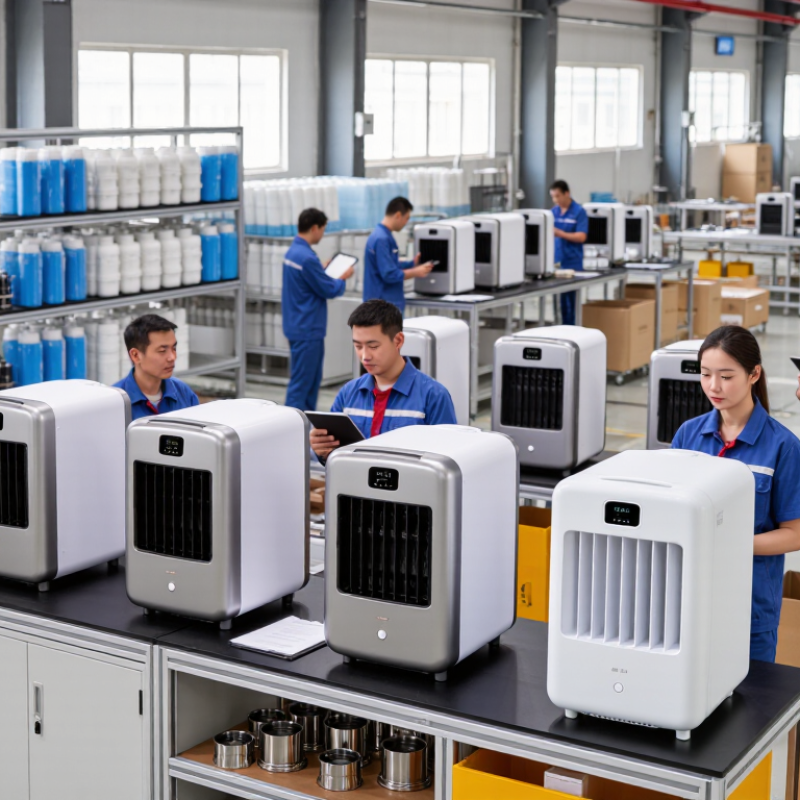
China has developed a large manufacturing base for HVAC equipment, including bypass, fan-powered, and steam furnace humidifier models. Leading suppliers commonly provide molded cabinets, water distribution panels, control sensors, and replacement pads. However, factory capability is not proven by a polished website. Buyers should request test records, material specifications, production photographs, and sample units. ASHRAE Handbook—HVAC Systems and Equipment emphasizes correct sizing, humidity control, drainage, and maintenance access. These details matter beside a real furnace, not just inside a catalog.

A reliable supplier should explain output capacity, water quality requirements, control compatibility, and installation limits. Certifications also require verification against the destination market. Some claims remain unclear without independent testing. This guide examines China’s leading suppliers through product quality, engineering support, customization, export experience, and after-sales reliability. The goal is simple: help global buyers compare evidence, not promises.
China Top Furnace Humidifier Suppliers for Global Buyers

What Is a Furnace Humidifier and How Does It Work?

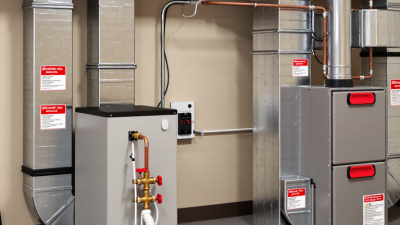
A furnace humidifier adds controlled moisture to dry air circulated through a heating system. It usually connects to the supply or return duct. A water panel, steam cylinder, or rotating disc releases moisture into the airflow. The blower then distributes it through rooms.

The control cycle is simple. A humidistat measures indoor relative humidity and signals the unit when levels fall below the selected setting. The furnace fan may run during heating, or a powered model may use its own fan.

The U.S. Environmental Protection Agency recommends keeping indoor humidity between 30% and 50%. This range can reduce dryness while limiting condensation and mold risk.

Control matters.

ASHRAE guidance explains that humidity affects thermal comfort, building materials, and indoor air quality. However, a furnace humidifier cannot solve every indoor-air problem. Poor drainage may cause standing water. Excessive output can fog windows or damage wood surfaces.

Field checks should include water flow, drain routing, sensor placement, and seasonal adjustment. Small errors matter.

A 2023 market analysis by Grand View Research reported continued growth in residential humidification demand, linked partly to comfort concerns and indoor-air awareness. Still, market growth does not guarantee correct installation.

Buyers should compare output capacity, maintenance needs, control accuracy, and compatibility with the furnace. The best specification is not always the largest one.

Key Types of Furnace Humidifiers for Different Heating Systems

Furnace humidifiers vary by heating system, duct layout, and indoor humidity needs. For standard forced-air furnaces, bypass humidifiers are a practical choice. They use warm air from the supply duct and return it through a water panel. Installation is usually simple, but they need enough airflow and regular panel replacement.

Fan-powered humidifiers include a small internal fan. They can produce more moisture than basic bypass units and work well where duct pressure is limited. These systems may suit larger homes or dry winter climates. Flow-through models reduce stagnant water concerns, while reservoir-style units can offer stronger output but require closer cleaning. Small details matter here.

Steam humidifiers create moisture independently of furnace airflow. They fit homes with heat pumps, variable-speed systems, or limited duct space. Their output is precise, although electrical demand and installation cost are higher. In my experience, matching capacity to the home is more important than choosing the most advanced type. Oversizing can cause window condensation and damp duct insulation. That is easy to overlook.

Global buyers should ask suppliers for tested output data, water-quality requirements, control compatibility, and replacement-part availability. Check whether the unit supports a humidistat and existing duct dimensions. Heating habits also change performance. A well-designed installation still needs seasonal inspection, especially before cold weather. Suppliers with clear specifications, responsive technical support, and documented quality procedures are usually safer partners. Yet specifications alone are not enough; field conditions can expose weaknesses.

How to Evaluate Top Suppliers in China

China Top Furnace Humidifier Suppliers for Global Buyers

How to Evaluate Top Suppliers in China

Evaluating a furnace humidifier supplier requires more than comparing export prices. Check whether the supplier understands steam output, water quality, furnace airflow, and seasonal demand. Ask for capacity data at your required voltage and operating conditions. A useful specification sheet should show humidity range, power consumption, control method, drain requirements, and replacement parts.

Request a working sample before placing a large order. Observe its startup time, steam stability, noise, and response to changing humidity levels. Inspect the electrode chamber, wiring, seals, and safety controls. A supplier should explain its testing process, not only provide attractive photographs. Factory visits can reveal assembly discipline, but a polished tour is not proof of consistent production. Independent inspection remains valuable.

Review quality records, material traceability, and batch inspection reports. Confirm whether the supplier can support installation guidance and troubleshooting in your language. Response speed matters when a unit stops during a cold week. Clarify packaging, lead times, warranty terms, and spare-part availability in writing. I once treated a low price as evidence of efficiency; later, unclear replacement-part costs changed the calculation. That was a preventable mistake. Compare the full operating cost, including maintenance and energy use. Suppliers with engineering staff, stable production controls, and clear communication usually deserve closer attention. Some smaller factories may offer flexibility, but their documentation can be uneven. Ask difficult questions early.

China Top Furnace Humidifier Suppliers for Global Buyers

How to Evaluate Top Suppliers in China

Global buyers should prioritize documented quality systems, manufacturing capability, export readiness, customization support, delivery reliability, after-sales service, and total cost. The percentages represent a practical due-diligence weighting model for comparing suppliers; they are evaluation criteria rather than company rankings.

Quality Standards, Certifications, and Manufacturing Capabilities

China Top Furnace Humidifier Suppliers for Global Buyers

Quality standards should guide every furnace humidifier purchase. Reliable suppliers use controlled materials, stable electrical components, and documented assembly procedures. Stainless steel chambers should resist heat and corrosion during continuous operation. Welded joints need visual inspection and leak testing. Small failures can damage production schedules.

Look for manufacturers operating under ISO 9001 quality systems. Depending on the destination market, products may also require CE marking, RoHS compliance, or applicable IEC safety testing. Ask for current certificates, test reports, and scope details. A certificate without matching product information proves very little. Serial numbers, batch records, and inspection photographs improve traceability.

Manufacturing capability matters beyond factory size. Strong suppliers maintain machining, welding, wiring, calibration, and final testing in controlled processes. They should explain humidity accuracy, response time, temperature limits, and maintenance access clearly. Request a sample inspection or factory audit when order volume is significant. In practical reviews, documentation is often weaker than the equipment itself. That deserves attention. Some suppliers may also need better overseas service planning, including spare seals, sensors, manuals, and remote troubleshooting. Honest communication about these gaps is more useful than polished promises.

China Top Furnace Humidifier Suppliers for Global Buyers - Quality Standards, Certifications, and Manufacturing Capabilities
Supplier Capability Category Common Product Type Typical Rated Output Typical Input Voltage Typical Installation Application Key Quality and Safety Standards Common Export Documentation Manufacturing Capabilities to Verify
Residential HVAC humidifier manufacturer Bypass evaporative furnace humidifier Approximately 8–17 L/day, depending on water temperature, airflow, and operating conditions Usually 24 VAC for the control valve or solenoid; some models require no separate fan motor Residential forced-air heating and cooling systems with a bypass duct connection ISO 9001 quality management; applicable electrical safety requirements; RoHS compliance where required by the destination market Commercial invoice, packing list, certificate of origin, product specification sheet, and test reports when requested Sheet-metal forming, injection-molded housings, water-panel assembly, leak testing, airflow testing, and control-valve inspection
Residential HVAC humidifier manufacturer Fan-powered evaporative furnace humidifier Approximately 12–23 L/day, subject to airflow, water pressure, and indoor operating conditions Commonly 120 VAC or 230 VAC for the fan motor, with low-voltage control options Forced-air furnaces where a dedicated internal fan improves moisture distribution ISO 9001; electrical safety evaluation to applicable IEC or national standards; EMC testing where electronic controls are included Electrical ratings label, wiring diagram, installation manual, spare-parts list, and destination-market compliance file Motor and fan balancing, electrical insulation testing, endurance testing, noise inspection, and final functional testing
Commercial HVAC humidifier manufacturer Electrode steam humidifier Approximately 3–90 kg/h for common commercial configurations; larger systems may be engineered to order Commonly 200–480 VAC, three-phase options available depending on output and market Commercial air-handling units, duct systems, laboratories, healthcare facilities, and process-air applications ISO 9001; IEC 60335-2-98 or relevant product safety requirements where applicable; CE-related conformity documentation for applicable European products Declaration of Conformity when applicable, electrical test report, pressure and wiring documentation, installation manual, and maintenance schedule Stainless-steel steam-cylinder production, electrode assembly, water-level control, over-temperature protection, cabinet wiring, and simulated-load testing
Commercial HVAC humidifier manufacturer Resistive steam humidifier Approximately 5–100 kg/h for standard commercial units; capacity depends on heater configuration Commonly 200–480 VAC, with single-phase and three-phase designs available Air-handling units, cleanrooms, museums, data-related facilities, and applications requiring precise humidity control ISO 9001; applicable IEC or national electrical safety standards; EMC and low-voltage conformity assessment where required Technical datasheet, wiring diagram, component certificates, routine test record, spare-heater information, and export packing documents Heater-tube fabrication, stainless-steel welding, thermal protection testing, control-panel assembly, water-quality compatibility testing, and burn-in testing
Industrial air-treatment equipment manufacturer Gas-fired or high-capacity steam humidification system Typically 20–250 kg/h or more, depending on the combustion and steam-generation design Control circuits commonly use 24 VAC or 230 VAC; fuel and electrical requirements vary by configuration Large air-handling systems, factories, warehouses, and process-humidity applications ISO 9001; applicable gas-appliance, pressure-equipment, combustion, electrical, and emissions requirements in the destination market Risk assessment, combustion documentation, installation drawings, commissioning checklist, conformity documentation, and service instructions Pressure-vessel or combustion-chamber fabrication, burner adjustment, gas-leak testing, flame-failure protection, control-system integration, and site commissioning support
OEM and private-label HVAC supplier Custom humidifier assemblies and replacement components Usually engineered around the buyer’s target output, cabinet size, and control protocol 24 VAC, 120 VAC, 230 VAC, and other regional specifications may be available Distributor programs, replacement parts, custom furnace packages, and regional HVAC product lines ISO 9001; RoHS and REACH documentation where applicable; product-specific safety and EMC testing based on the final configuration Private-label artwork approval, bill of materials, inspection standard, production sample approval, compliance file, and traceability records Tooling management, engineering change control, barcode and label customization, sample approval, batch traceability, and inspection according to buyer-defined specifications
Export-oriented HVAC equipment supplier Multi-voltage humidifier product range Residential and commercial capacities commonly ranging from approximately 8 L/day to 100 kg/h Regional configurations may include 110–120 VAC, 220–240 VAC, and 380–480 VAC North American, European, Middle Eastern, and Asia-Pacific HVAC distribution channels ISO 9001; CE conformity documentation where applicable; RoHS documentation for restricted substances; destination-market electrical requirements Commercial invoice, packing list, certificate of origin, HS-code support, compliance declarations, test reports, and multilingual manuals Multi-market labeling, plug and cable customization, container loading plans, export packaging, pre-shipment inspection, and after-sales parts management
Quality-focused HVAC component supplier Humidistat, solenoid valve, water-panel, sensor, and control-module assemblies Rated according to the finished humidifier system; individual components are selected by flow, pressure, voltage, and control requirements Low-voltage control circuits commonly use 24 VAC; component ratings vary by design Furnace retrofit kits, replacement programs, and original-equipment assemblies ISO 9001; component-level electrical, material, and EMC documentation where applicable; RoHS compliance for relevant electronic parts Component datasheets, incoming-inspection records, material declarations, reliability reports, and lot traceability documents Calibration control, incoming material inspection, valve-flow testing, sensor accuracy testing, connector inspection, and component traceability
Buyer verification note: Output ratings are typical market ranges rather than guarantees for a specific manufacturer. Actual capacity depends on water quality, water pressure, air temperature, airflow, duct static pressure, control strategy, installation conditions, and operating hours. Buyers should request current certificates, applicable test reports, sample approval records, factory audit evidence, and destination-market compliance documents before placing an order.

Ordering, Installation Support, and Global Buyer Considerations

China Top Furnace Humidifier Suppliers for Global Buyers

For global buyers, sourcing a furnace humidifier from China requires more than comparing quotations. The U.S. EPA’s moisture guidance recommends maintaining indoor relative humidity between 30% and 50%. The ASHRAE Handbook—HVAC Systems and Equipment, 2020, stresses capacity selection through moisture-load calculations, not room size alone. Ask suppliers for output at specified water temperature, airflow, and inlet conditions. Small details matter.

An effective order should include furnace model, duct dimensions, climate zone, voltage, water hardness, drain location, and control preference. Request a signed datasheet, wiring diagram, spare-parts list, and packaging photos. Check whether the supplier supports pre-shipment testing and video commissioning. The U.S. Department of Energy’s Building America guidance links air-sealing and duct performance with moisture control. Installation advice should cover leakage, drainage, and sensor placement. Cheap hardware can become expensive.

Global buyers should verify electrical documentation, material declarations, warranty terms, and local certification needs before payment. Ask for English manuals and clear fault codes. Installation support should include startup procedures, maintenance intervals, and replacement-pad guidance. Water quality deserves attention; mineral buildup can reduce output and shorten service life. Real projects still surprise us. A supplier may promise universal compatibility, yet furnace controls differ widely. Keep a sample unit, approve drawings, and define response times in writing. EPA guidance warns that indoor humidity above 50% can encourage mold growth, making commissioning measurements essential.