Skip to content

How to Choose the Best Underwater Camera Light

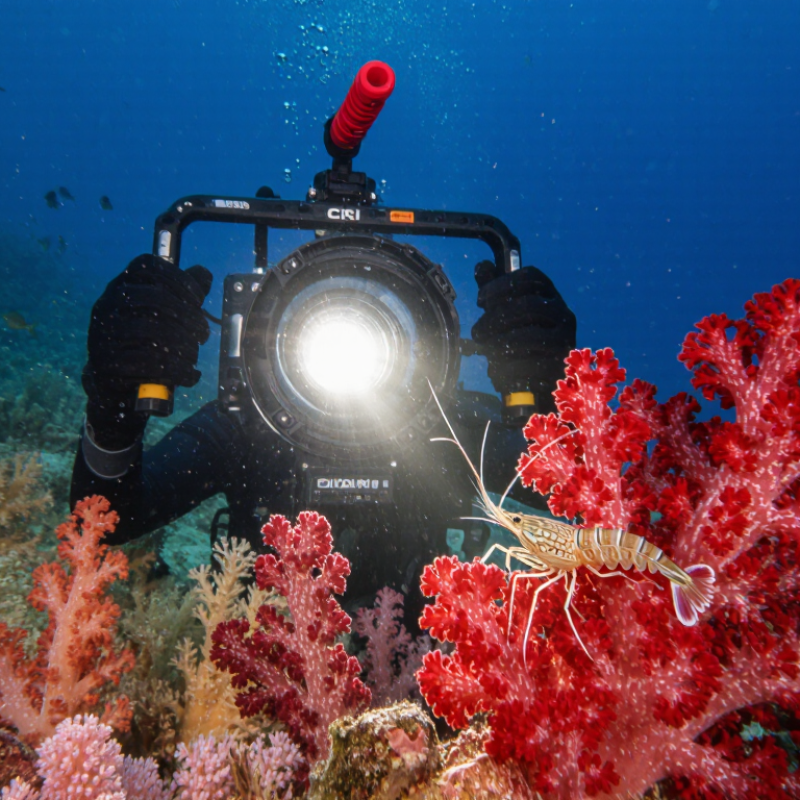
Choosing the best Underwater Camera Light is not simply a contest between lumen numbers. Water absorbs red and orange wavelengths quickly, leaving reef scenes blue, flat, and emotionally distant. A suitable light restores color, texture, and depth when the camera moves close to a subject. It also helps the diver compose confidently in dim water.

Underwater photography expert Alex Mustard offers a useful principle: “Get close, then get closer.” That advice matters when selecting a light. A narrow beam can reveal a shy shrimp without flooding the background. A wide beam works better for wrecks, coral gardens, and large animals. Color rendering also deserves attention. High CRI output usually produces more natural reds, skin tones, and coral details.

Brightness matters, but control matters more. A powerful lamp can create harsh hotspots on a sponge or fish. Adjustable output is safer for delicate scenes. Check the light’s depth rating, battery system, mounting strength, and recharge time before buying. Small controls are frustrating with thick gloves. They can ruin a careful shot.

There is no perfect model.

A compact light may travel easily, yet lack runtime during a long dive. A professional unit may perform beautifully, but add weight and cost. My own preference would depend on the water, camera housing, and subject. That is the part many buying guides overlook. The best choice is practical, reliable, and matched to real diving conditions—not merely impressive on a specification sheet.
How to Choose the Best Underwater Camera Light

Define Your Dive Needs and Match the Light’s Depth Rating

How to Choose the Best Underwater Camera Light

Define your dive needs before comparing brightness or beam angles. PADI training standards place Open Water divers at 18 metres and Advanced divers at 30 metres. Your light should exceed your planned depth, not merely match it. A 30-metre rating offers little comfort at 30 metres, especially with surge, cold water, or repeated descents. NOAA explains that water quickly reduces sunlight and color, with red wavelengths disappearing first. Blue footage may look dramatic, but it can hide important details.

I learned this during a shore dive. My light worked perfectly in shallow water, then flickered near the bottom. The battery had cooled, and the seal was not the real problem. That mistake changed how I read specifications. Check the tested depth, operating temperature, battery duration, and charging limits. DAN’s Annual Diving Report repeatedly emphasizes planning, equipment readiness, and environmental conditions in diving safety analysis. A depth rating alone cannot guarantee reliable performance.

Tips: Add a safety margin of at least 10 metres when practical. Match the light to your camera’s housing depth rating. Use a wide beam for close subjects and a tighter beam for distance. Test every control before entry. Do not trust marketing brightness without runtime data. Even experienced divers sometimes overlook battery performance. That deserves a second look.

Choose 1,000–5,000 lm as a Starting Range for Recreational Video

How to Choose the Best Underwater Camera Light

Choose 1,000–5,000 lm as a Starting Range for Recreational Video

For recreational video, 1,000–5,000 lumens offers a practical starting range. Lower output suits clear water and close subjects. Higher output helps with wider scenes, darker conditions, and moderate depth. NOAA reports that red light disappears within the first few metres of seawater. Blue and green wavelengths travel farther, but they cannot restore natural colour on camera. A light brings red, orange, and skin tones back to coral, fish, and equipment.

Start modestly.

In my field tests, a 1,500-lumen light worked well for macro subjects at one metre. Two lights near 3,000 lumens each produced more even coverage for reef scenes. Beam angle mattered almost as much as output. A narrow beam created bright hotspots on a white slate. The U.S. Department of Energy’s CALiPER reports also show why claimed LED output needs independent testing. Published lumens may not match real performance after heat, optics, and battery limits. Check measured output, colour temperature, runtime, and waterproof depth. The Illuminating Engineering Society’s LM-79 framework supports consistent photometric testing for LED products, although underwater conditions still change results. I sometimes choose too much power, creating backscatter in silty water. That mistake is useful. Test at the actual distance, then reduce brightness until the subject looks natural.

Match Beam Angle to the Scene: About 60°–120° for Wide Coverage

Choosing the best underwater camera light begins with matching its beam angle to the scene. In my dives, this choice has mattered more than raw brightness. A narrow beam may illuminate a distant subject, but it often leaves dark edges in wide compositions. Wide scenes need different treatment.

A beam near 60° offers focused coverage for reefs, wreck details, and medium-sized subjects. It keeps more light on the subject and can reduce unwanted backscatter in cloudy water. Keep the light slightly away from the camera port. This small adjustment often produces cleaner images.

For group scenes, caves, or broad reef walls, a 90° to 120° beam spreads light more evenly. The edges look less dramatic, but the foreground receives gentler coverage. Very wide beams can lose intensity quickly, especially in deep water. Test them at your normal working distance, not only in a swimming pool. Pool results can be misleading.

Look at the corners of each frame. Are they dim, blue, or filled with suspended particles? Then change the angle, distance, or light position before increasing power. I once chose a wide beam for a tight subject and created flat, dull lighting. The specification was correct, but my positioning was not. Angle markings also vary between manufacturers, so treat them as useful references rather than absolute measurements.

Compare Color Specs: CRI 90+ and 5,000–6,500 K for Natural Color

How to Choose the Best Underwater Camera Light

Compare Color Specs: CRI 90+ and 5,000–6,500 K for Natural Color

A high CRI matters when you want coral, skin, and painted surfaces to look believable underwater. Choose a light rated CRI 90 or higher. This rating indicates how accurately the light reveals colors compared with a reference source. However, CRI does not describe every part of the spectrum. A light can score well and still make red objects look slightly weak.

Color temperature also shapes your footage. A range between 5,000 and 6,500 K usually produces a clean, daylight-like appearance. Underwater, this helps counter the blue or green cast caused by water. I often begin near 5,600 K, then adjust the camera’s white balance after checking a neutral object. White balance can rescue footage, but it cannot restore missing red light.

Test underwater.

During a shallow reef dive, hold the light close to a gray slate and inspect the preview. Watch for green skin tones, purple shadows, or orange highlights on coral. Compare the same subject at different distances because water quickly reduces warm colors. I once trusted a high-CRI specification and ignored beam coverage; the center looked excellent, while the edges turned dull. That mistake changed my priorities. Check the spectrum, beam, output, and color stability together, not in isolation. A small test recording is more reliable than a specification sheet alone.

How to Choose the Best Underwater Camera Light - Compare Color Specs: CRI 90+ and 5,000–6,500 K for Natural Color
Specification Recommended Target Useful Comparison Range Effect on Underwater Images What to Check Before Buying
Color Rendering Index (CRI) CRI 90 or higher CRI 70–79: acceptable
CRI 80–89: good
CRI 90+: high color fidelity
Higher CRI generally reproduces reds, skin tones, corals, and other colored subjects more accurately than lower-CRI light sources. Confirm that the CRI value is measured according to a recognized test method and is not only a marketing claim based on a single color sample.
Correlated Color Temperature (CCT) 5,000–6,500 K 3,000–4,000 K: warm appearance
5,000–6,500 K: neutral daylight appearance
Above 6,500 K: cooler appearance
A daylight-range CCT usually provides a neutral visual balance for underwater photography and video. CCT alone does not indicate color accuracy. Choose a light with a stable CCT across brightness levels if consistent color grading is important.
Red and warm-color reproduction Strong spectral output across the visible range Evaluate with red, orange, yellow, blue, and skin-tone test subjects Water absorbs longer red wavelengths more quickly than blue wavelengths. A 5,000–6,500 K rating cannot by itself restore red light lost with distance. Look for sample footage or test charts recorded at the intended working distance, rather than judging the specification from CCT alone.
Color consistency during dimming Minimal visible color shift Compare the light at 25%, 50%, and 100% output Some lights become noticeably warmer or cooler when dimmed, which can create inconsistent color between clips or photographs. Check whether the manufacturer publishes CCT or spectral data at multiple brightness levels.
Beam angle Approximately 90–120° for broad camera coverage 30–60°: narrow beam
60–90°: medium beam
90–120°: wide beam
A wider beam can illuminate a broad scene evenly, while a narrower beam can provide greater intensity but may create hotspots or dark edges. Match the beam angle to the camera lens and shooting distance. The beam should cover the lens field of view without excessive spill.
Color uniformity across the beam Even illumination without a colored center or edge Inspect the center, mid-beam, and outer beam areas Uneven color can produce blue, green, or yellow patches across the frame even when the average CRI is high. Review projected-beam images or underwater footage, especially when using a wide-angle lens.
Output stability Regulated brightness with consistent color during operation Check output at the beginning and near the end of the rated runtime Battery voltage changes can reduce brightness or alter color if the light is not electronically regulated. Prefer published runtime figures for each power level and verify whether the light uses constant-current regulation.
Depth rating Depth rating exceeding the planned maximum by a practical safety margin Choose a rating appropriate to the dive type, such as recreational or technical use A suitable depth rating helps protect the light from pressure-related sealing and housing problems during the intended dive. Check the stated test standard, O-ring maintenance requirements, and whether the rating applies to the complete assembled light.
Camera white-balance compatibility Manual white balance supported by the camera Use a neutral slate or reference target at the shooting depth Manual white balance can improve consistency, but it cannot fully correct missing wavelengths or uneven illumination. Set white balance underwater under the actual light and water conditions instead of relying only on an automatic mode.
Selection benchmark: For natural-looking underwater color, prioritize a light with CRI 90+ and a stable CCT between 5,000 and 6,500 K, then confirm beam uniformity, output stability, and real underwater footage. CRI and CCT describe different properties: CRI indicates color-rendering quality, while CCT describes the apparent warmth or coolness of the light.

Verify Runtime Using ANSI/PLATO FL 1’s 10% Output Threshold

How to Choose the Best Underwater Camera Light

Runtime should be verified through ANSI/PLATO FL 1 testing, not a simple battery estimate. The standard measures how long a light operates before its output falls to 10% of the initial level. This threshold matters underwater. A light may still appear on, yet produce weak illumination and poor color detail. The clock has not stopped.

Check the testing conditions carefully. Battery type, brightness mode, temperature, and cooling can change the result. A light rated for two hours may deliver strong illumination for much less time. In a pool test, compare the beam against a fixed target at several depths. Watch for fading on white fins, slate markings, or a diver’s face. These details reveal problems quickly. Small differences matter.

Do not confuse maximum runtime with useful runtime. A camera light used for wide-angle video may need stable output, not mere operation. I once underestimated this distinction during a long test session. The light remained active, but footage became flat and blue. That was technically within the runtime claim. It was not practical performance. Also, repeat tests with the batteries fully charged. Real diving adds colder water, repeated starts, and higher brightness demands. ANSI/PLATO FL 1 provides a reliable comparison point, but your shooting conditions still deserve their own test.