Choosing the right furnace humidifier filter begins with understanding what your system actually uses. Many homeowners call the water panel a filter, although it controls moisture rather than trapping household dust. That small distinction matters. A mismatched panel can restrict water flow, leave mineral buildup, and produce dry air during the coldest weeks.
HVAC educator David Richardson offers a practical reminder: “Match the replacement part to the humidifier, not simply to the furnace.” That advice is easy to overlook. Check the humidifier’s model number, cabinet size, water distribution tray, and manufacturer’s replacement code. A panel that looks similar may still sit loosely or fail to absorb water evenly. Measure twice.
Look for a furnace humidifier filter with a rigid, cleanable frame or coated surface, depending on your unit’s design. Inspect the old panel before buying. White crust, dark staining, or a musty smell signals replacement rather than reuse. In hard-water areas, seasonal replacement may be necessary. Some homes need it sooner.
Do not chase the highest air-filter rating. A humidifier water panel is not the same as a pleated furnace filter. Confusing them can lead to poor performance and unnecessary expense. The installation should also leave the drain unobstructed, with water moving steadily into the drain line.
A careful choice supports balanced humidity, fewer mineral deposits, and more predictable comfort. Still, no product lasts forever. Even the best furnace humidifier filter needs inspection, cleaning around the cabinet, and replacement when its surface becomes clogged. That part is easy to forget.
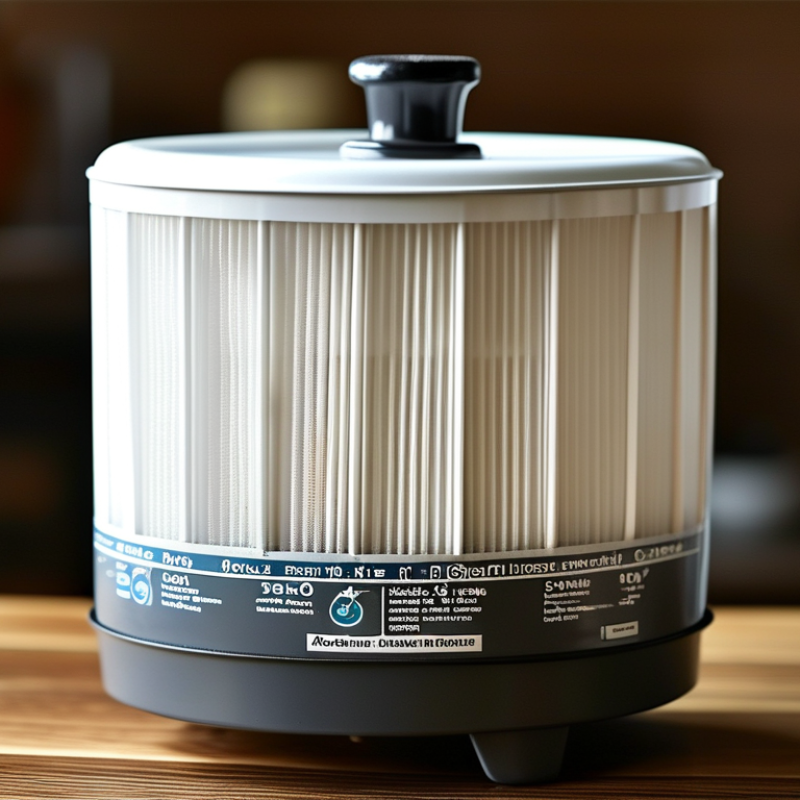
A furnace humidifier filter, often called a water panel, does more than catch dust. It holds a thin layer of water while warm furnace air moves across its surface. The airflow picks up moisture, then carries it through the home’s ductwork. In bypass systems, air moves through the humidifier with help from pressure differences. Fan-powered units use a small internal fan.
The filter gradually collects minerals from the water. White crusts can block airflow and reduce moisture transfer. A damp, worn panel may also create an unpleasant smell. During a seasonal inspection, check for hardened deposits, flattened material, or uneven wetting. The filter should feel moist, not soaked or dripping. Small details matter here.
Choosing the right replacement starts with the humidifier’s model and the filter’s exact dimensions. Similar-looking panels are not always interchangeable. Check the installation guide, water distribution tray, and mounting direction. Your local water quality also matters; hard water usually shortens filter life. Many homes need replacement once or twice each heating season, but that schedule is only a starting point. A monthly visual check is more reliable than a calendar reminder. I used to treat the replacement date as fixed, but actual mineral buildup can change quickly.
| Selection Factor | What It Means | Typical Information | Practical Buying Guidance |
|---|---|---|---|
| Humidifier Type | The filter design depends on how the furnace humidifier adds moisture to the air. | Bypass and fan-powered evaporative units commonly use replaceable water panels or evaporator pads. Steam units generally use a canister or steam-cylinder assembly rather than a conventional water panel. | Identify the humidifier type before ordering. A water panel for an evaporative unit is not interchangeable with a steam canister. |
| Physical Dimensions | The replacement must fit the cabinet, frame, or retaining tray correctly. | Common evaporator-pad sizes vary considerably; many residential models use panels approximately 9–10 inches wide and 9–10 inches high, but exact dimensions are model-specific. | Measure the old component and compare width, height, thickness, frame style, and mounting orientation with the equipment documentation. |
| Core Material | The material holds and distributes water across a large surface so warm air can evaporate it. | Evaporative panels commonly contain a coated metal mesh or expanded aluminum core with a water-distribution coating. Some units use plastic or other engineered media. | Choose the specified core material and frame configuration. A visually similar pad may not distribute water correctly. |
| Water Hardness | Dissolved minerals can accumulate on the pad, reducing water flow and evaporation. | Hard water generally causes faster scale buildup than soft water. Mineral deposits may appear as white or gray crust on the media and drain components. | Homes with hard water may need more frequent inspection or replacement. Follow the humidifier and furnace manufacturer’s maintenance instructions. |
| Airflow Direction | The pad must receive water and airflow in the intended direction for even evaporation. | Many evaporative assemblies have a designated top, bottom, or water-entry side. Incorrect orientation can cause dry areas, leakage, or poor evaporation. | Check arrows, labels, clips, and the water-distribution tray before installation. Do not assume that a reversible-looking pad is actually reversible. |
| Water Distribution | A small valve or inlet supplies water to a distribution tray, which spreads water over the evaporative media. | Excess water normally drains away while a thin film remains on the pad. Blocked holes or a dirty tray can create uneven wetting. | Inspect the tray, inlet, drain line, and pad together. Replacing only the pad may not solve a clogged or restricted water path. |
| Replacement Interval | The service life depends on operating time, water quality, humidity demand, and mineral accumulation. | Many residential evaporative pads are inspected annually and commonly replaced once per heating season, although actual intervals vary. | Replace sooner if the pad is clogged, brittle, heavily scaled, moldy, damaged, or no longer becomes evenly wet. |
| Humidity Control | The humidifier operates when the control calls for moisture and the furnace or air handler provides suitable airflow. | A dirty pad can reduce evaporation, but low humidity can also result from incorrect control settings, a closed water valve, blocked airflow, or a drain problem. | Check the water supply, control setting, furnace operation, airflow, and drain before assuming the filter alone is defective. |
| Indoor Relative Humidity | Relative humidity indicates how much moisture is in the indoor air compared with the maximum amount the air can hold at that temperature. | A commonly recommended winter target is approximately 30%–40%, adjusted downward in very cold weather to reduce window condensation. | Use a hygrometer and watch for condensation on windows or other cold surfaces. Excess humidity can contribute to moisture damage and microbial growth. |
| Maintenance Safety | The humidifier is connected to water and may be installed near electrical furnace components. | Water leaks, electrical connections, sharp sheet-metal edges, and moving furnace parts can create safety hazards during servicing. | Turn off the humidifier water supply and follow the equipment instructions. Disconnect electrical power when required, or use a qualified technician. |