Skip to content

How to Choose the Right Well Drilling Equipment?

Choosing the right Well Drilling Equipment begins with the ground beneath the worksite, not with a machine’s advertised depth. Sand, fractured rock, clay, and mixed formations place different demands on a rig, drill bit, and circulation system. A rotary setup may suit one site, while percussion drilling may be more practical elsewhere. There is no universal answer. Even nearby properties can behave differently underground.

Define the expected well depth and diameter, then consider site access, available power, water supply, and transport limits. A narrow rural lane or soft, wet ground can rule out equipment that looks suitable on paper. Match the rig’s capacity to the proposed casing and drilling method, and check that compatible rods, bits, hoses, and maintenance support are available. Small details matter. A missing adapter can halt a crew as surely as a major breakdown. Reliable selection also means reviewing manufacturer specifications and consulting qualified drilling professionals who understand local geology. They can help assess formation data and identify practical risks before equipment is mobilized. Yet estimates are imperfect; unexpected layers or unstable ground may require a change in plan. That possibility should shape both the equipment choice and the schedule. The best setup is not necessarily the largest or newest. It is the one that can safely meet the project’s technical needs, operating conditions, and budget—with enough flexibility for the ground to surprise you.
How to Choose the Right Well Drilling Equipment?

Define the Well’s Purpose, Depth, and Site Conditions

Before comparing drilling equipment, define what the well must do. A household supply well has different demands from an irrigation well or a groundwater monitoring point. Estimate daily water needs, expected flow, and whether water quality testing will affect the design. Write these requirements down. Guessing is costly.

Depth depends on local geology and the target water-bearing formation, not simply the desired pump setting. Review nearby well records and consult a qualified local drilling professional, since neighboring wells can still reach different conditions. Ask about expected casing length, rock layers, and the chance of unstable or collapsing formations. A deeper target may call for a rig with greater reach and suitable torque, but extra capacity alone does not guarantee a successful well.

Walk the site before choosing a rig. Check access width, overhead branches, ground firmness, slope, and space for the mast and support vehicles. A muddy entrance can delay work even when the drill itself is appropriate. Note nearby buildings, buried utilities, and places where drilling fluids or cuttings can be managed safely. Conditions may change after rain. I would leave room for surprises; site notes are useful, but they are never the whole site.

How to Choose the Right Well Drilling Equipment? — Define the Well’s Purpose, Depth, and Site Conditions
Planning Factor Typical Conditions or Requirements Equipment Considerations Key Checks Before Selection
Well purpose Domestic water supply, irrigation, livestock, monitoring, or geothermal use Match the drilling method, bore diameter, casing, and completion tools to the required yield and intended use. Estimate daily demand, required flow rate, water quality needs, and applicable local standards.
Target depth Shallow wells may reach the water table; deeper wells may penetrate confined aquifers or consolidated rock. Confirm the rig’s rated drilling depth, hoisting capacity, mast height, and compatibility with the planned drill-string length. Review nearby well records, geological maps, and anticipated aquifer depth; allow for uncertainty in the final depth.
Soil and formation Unconsolidated sand and gravel, clay, weathered material, or hard and fractured rock Augers or rotary methods may suit some unconsolidated formations; rotary or down-the-hole hammer systems are commonly considered for competent rock. Identify likely layers, formation stability, abrasiveness, and whether temporary casing or drilling fluid may be needed.
Groundwater conditions Water-bearing layers can vary in depth, pressure, and permeability. Select equipment that can safely manage groundwater inflow and support appropriate casing and well-screen installation. Check known water levels, artesian potential, seasonal variation, and requirements for protecting aquifers from contamination.
Site access and terrain Restricted yards, steep slopes, soft ground, remote locations, or overhead obstacles Consider rig dimensions, transport method, ground pressure, setup footprint, and available working clearance. Verify access routes, turning space, soil bearing capacity, overhead utilities, and safe equipment positioning.
Water and power availability Remote sites may lack a reliable water source, grid power, or fuel access. Plan for the rig’s power requirements, compressor or pump needs, fuel consumption, and any water-storage or recirculation system. Confirm supply capacity, operating hours, delivery logistics, and the availability of suitable water for drilling operations.
Casing and borehole design Casing diameter and materials depend on the well design, formation stability, and local regulations. Ensure the rig can handle the planned casing diameter and length, and has compatible lifting and installation tools. Specify bore diameter, screen placement, casing materials, and sanitary sealing requirements before mobilization.
Safety and compliance Drilling involves rotating machinery, suspended loads, noise, dust, and potential contact with underground or overhead services. Choose equipment with suitable guarding, emergency stops, stable setup features, and maintenance support. Check permits, utility clearances, operator training, site-specific risk controls, and applicable well-construction rules.

Compare Drilling Methods for the Ground Type

Choosing well drilling equipment starts with the ground, not the machine’s advertised depth. In loose sand or soft clay, hollow-stem augers can support the bore while bringing soil to the surface. They work best where cobbles and hard layers are limited. Rotary drilling with drilling fluid may suit deeper holes in mixed, unconsolidated ground. The fluid helps carry cuttings upward and can steady the bore walls. It also creates a mess that needs careful handling.

Rock changes the choice. Air rotary drilling can break competent formations and lift fragments with compressed air, while down-the-hole hammer systems are useful in hard rock. Fractured formations may lose air or fluid, so a method that looks efficient on paper can slow sharply underground. Cable-tool drilling is slower, but its repeated impact can be practical in some formations and may reveal changes in the cuttings. Every site has its quirks. A nearby well log, test drilling, and advice from an experienced local driller help narrow the options. Check groundwater conditions and casing needs before selecting a rig. I would not treat a soil map as certainty; small changes in gravel or water level can alter the best setup.

Match the Rig and Tools to Project Requirements

How to Choose the Right Well Drilling Equipment?

Choosing well drilling equipment starts with the ground, not the catalog. Match the rig and tools to depth, diameter, geology, access, and the water target. A shallow test bore needs a different setup from a 300-meter production well. Review site surveys, borehole records, and casing sizes before selecting power or torque. Soft alluvium may accept rotary methods, while fractured rock often demands down-hole percussion. Conditions change quickly. Carry contingency tooling.

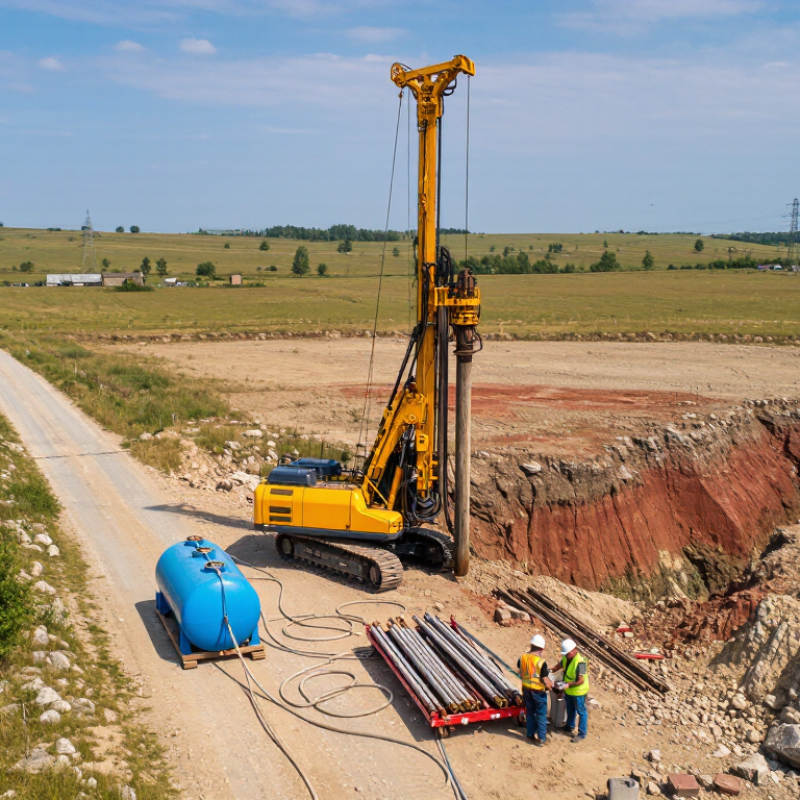
Rig capacity must exceed planned depth and load, with room for casing, drill pipe, and lifting operations. Check mast height against the work area, especially beneath cables or inside enclosed compounds. Mud pumps should provide suitable flow without eroding weak formations. Choose bits for hardness, abrasiveness, and fracture behavior. Keep stabilizers, spare hoses, and correctly sized fishing tools available. Small omissions cause expensive delays.

Reliable selection also includes water management, noise limits, transport weight, and operator skill. Ask the drilling contractor to explain torque, pullback, compressor demand, and maintenance intervals clearly. Verify calculations against local rules and the engineer’s design. Field evidence matters more than sales claims. A rig can look powerful yet perform poorly with unsuitable circulation. A perfect match is rare. Recheck turning space and ground bearing capacity before mobilization. The best choice is not always the largest rig; it is the one that safely matches the formation and project controls.

Check Power, Mobility, Safety, and Regulatory Needs

How to Choose the Right Well Drilling Equipment?

Check Power, Mobility, Safety, and Regulatory Needs

Power needs depend on the ground, well depth, and drilling method. Hard rock can demand sustained torque, while softer formations may need less force but careful control. Compare the rig’s rated capacity with the conditions in the drilling plan, not just its maximum figures. A generous power rating is not automatically a better fit.

Mobility matters before the rig reaches the site. Measure access roads, gate widths, overhead clearance, and the space needed to position support vehicles. A compact rig may travel easily but require more setup time. That trade-off is easy to underestimate. Check ground bearing conditions too; a heavy unit can sink or shift on wet, uneven soil.

Safety features should match the actual work. Look for accessible emergency stops, guarded rotating parts, stable supports, and clear operator controls. Confirm that workers can communicate over engine noise and keep people outside the operating area. Even good equipment cannot replace training or routine inspections. Dust, vibration, and awkward hose placement can be overlooked during a rushed site review.

Regulatory requirements vary by location and project. Verify permits, operator qualifications, noise limits, and groundwater protection rules with the relevant authorities before mobilization. Keep equipment records and inspection documents available on site. Requirements can change, and an old checklist may miss a local condition.

Compare Costs, Maintenance, and Supplier Support

Choosing well drilling equipment is a cost decision that extends beyond the purchase price. Compare the full operating cost, including transport, fuel, drill rods, bits, and crew training. A lower-priced rig may need more frequent part replacement or longer setup time. Ask suppliers for service intervals and typical wear-part costs in writing. Then compare those figures against the ground conditions and drilling depth you expect. Keep a repair allowance. It is easy to underestimate downtime.

Maintenance access matters on a real worksite. Check whether filters, hoses, and service points can be reached without removing major components. Ask how often routine inspections are needed, and whether the supplier can provide parts quickly to your operating area. Get clear warranty terms and response-time expectations before ordering. A helpful sales conversation is not the same as dependable technical support. Request references from operators using similar equipment, and ask what happened when a breakdown occurred. One detail can be revealing: how long did a replacement component take to arrive? No supplier can promise zero delays. I would still compare support plans carefully, because a day of idle drilling can cost more than a small difference in the initial price.