Skip to content

What Is an Air Release Valve and How Does It Work?

Air Release Valve is a small component with an important job in many water pipelines. It allows trapped air to escape as a system fills or operates. Without that outlet, air pockets may reduce flow, create uneven pressure, and interfere with reliable service. The effects are not always obvious. A pipe may look sound while its performance quietly changes.

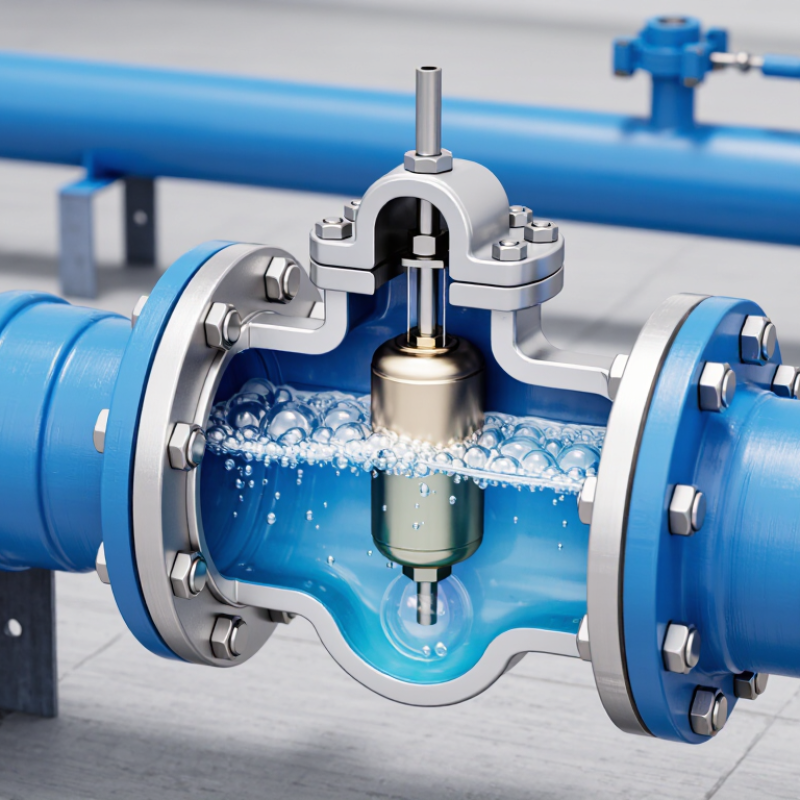
The basic mechanism is straightforward. As air gathers inside the valve chamber, the water level falls and a float drops. This movement opens an orifice, letting air leave the pipeline. When water reaches the chamber again, the float rises and closes the opening. Simple, but not foolproof. Valve design, operating pressure, installation position, and maintenance all affect performance. A poorly selected valve can release air too slowly, or fail to seal as intended.

This guide explains what an Air Release Valve does, how its internal parts work, and where it is commonly installed. It also distinguishes air release valves from related air valves, since the names are sometimes used loosely. That distinction matters when choosing equipment for a real pipeline. Field conditions can be messy. Pipe slopes, changing flow, and debris may complicate what sounds like a simple process. Understanding the basics helps operators and designers ask better questions, though it cannot replace checking manufacturer specifications or site requirements. There is no single valve for every system. We will look at the practical details, including common benefits and limitations.
What Is an Air Release Valve and How Does It Work?

Air Release Valve: Definition and Purpose

An air release valve is a small but important device installed on pressurized water pipelines. Its purpose is simple: remove trapped air during normal operation. Air enters through filling, maintenance, leaking joints, or dissolved gases released from water. Without control, an air pocket can reduce flow, create noise, and increase pressure changes.

The valve usually contains a float, seat, and discharge opening. When air collects inside the chamber, the float drops. The opening then releases air into the atmosphere. As water reaches the chamber, the float rises and seals the opening. Some designs also admit air when a pipeline drains, helping prevent damaging vacuum conditions. They are not pressure regulators, and they cannot replace surge-control equipment.

This function matters as water systems age. The U.S. EPA’s 2023 Drinking Water Infrastructure Needs Survey estimated $625 billion in national needs over 20 years. Reliable air management can support efficient operation and reduce avoidable mechanical stress. AWWA Manual M51 also emphasizes correct valve sizing, placement, and maintenance. Still, field results are not always perfect. A poorly located valve may protect little, despite looking correctly installed.

Tips: Place valves at pipeline high points, long rising sections, and locations with changing slopes. Check the discharge outlet for blockage. Inspect floats and seals during scheduled maintenance. Record recurring air problems; they may indicate hydraulic design issues, not just a faulty valve.

Key Components and Their Functions

An air release valve removes trapped air from a pressurized pipeline. It also admits air when negative pressure threatens pipe collapse. Its body connects to the pipeline, while an internal float responds to water level. When air enters the chamber, the float drops and opens the small orifice. Water lifts the float and closes the seat. Simple movement. A separate large orifice handles rapid air intake and discharge during filling or draining.

Key components determine reliability. The valve body contains pressure and directs flow. The float provides buoyancy and must resist corrosion. The orifice controls air movement, while the seat creates a watertight seal. A small drain, isolation valve, or inspection port supports maintenance. AWWA Manual M51 identifies air-release, air/vacuum, and combination valves as distinct service types. Selecting the wrong type can leave air pockets, increase head loss, or create damaging pressure surges.

The U.S. EPA’s 7th Drinking Water Infrastructure Needs Survey estimates $625 billion in needs over 20 years. That figure covers broad infrastructure, not air valves alone. Still, it shows why small components deserve careful attention. In field work, no valve performs perfectly without correct sizing, installation, and inspection. That part is often underestimated.

Tips: Install the valve at pipeline high points. Check the discharge outlet for blockage. Test float movement during scheduled maintenance. Record pressure, leakage, and operating conditions. A short inspection note can prevent a costly assumption later.

What Is an Air Release Valve and How Does It Work?

An air release valve removes trapped air from pressurized pipelines. As pressure increases, a fixed mass of air occupies less volume according to Boyle’s law: P₁V₁ = P₂V₂. The chart shows the theoretical air-pocket volume at constant temperature, relative to 100% volume at 1 bar absolute.

Valve Body: Contains the internal flow path and connects the valve to the pipeline.
Float: Rises with liquid level to close the discharge opening and falls when air is present.
Orifice: Provides the controlled passage through which accumulated air escapes.
Cover and Gasket: Protect the mechanism and maintain a sealed connection during operation.

As air accumulates inside the valve, the liquid level falls, the float drops, and the orifice opens. Once liquid replaces the released air, the float rises and closes the orifice.

How an Air Release Valve Works

What Is an Air Release Valve and How Does It Work?

How an Air Release Valve Works

An air release valve removes trapped air from pressurized pipelines. Air commonly gathers at high points, bends, and sudden changes in pipe elevation. Inside the valve, a float moves with the water level. When air enters the chamber, the float drops and opens a small discharge orifice. Air escapes first. Water then lifts the float and closes the opening.

Simple, but not always forgiving.

During pipeline filling, a larger air-and-vacuum valve allows large air volumes to leave quickly. During draining or a sudden pressure drop, it admits air and helps prevent vacuum conditions. A combination valve performs both functions. This distinction matters because a small automatic air release valve cannot safely replace a large vacuum valve in every application.

AWWA M51 provides design and selection guidance for air-release, air-vacuum, and combination valves. It emphasizes pipeline profile, operating pressure, flow conditions, and valve sizing. The U.S. EPA’s 7th Drinking Water Infrastructure Needs Survey and Assessment estimates a 20-year drinking-water infrastructure need of about $625 billion. That scale makes small reliability decisions important.

Field inspections often find blocked vents, poor drainage, or incorrect installation heights. These details can reduce performance. Valve selection should follow the system’s hydraulic calculations, not habit. A short hiss may be normal; repeated discharge, vibration, or water hammer deserves investigation. The design can still be wrong.

What Is an Air Release Valve and How Does It Work?
Operating Stage Condition Inside the Pipeline Valve Action How the Mechanism Works Practical Result
1. Air Accumulation Air naturally collects at high points in a pressurized water or liquid pipeline because air is less dense than the liquid. The valve remains connected to the pipeline through its inlet. As air enters the valve chamber, the liquid level inside the chamber falls and the float moves downward. Air is prepared for automatic discharge instead of remaining trapped in the pipeline.
2. Air Discharge The accumulated air lowers the liquid level in the valve chamber. The discharge opening opens. The float drops away from the outlet mechanism, allowing trapped air to escape through the vent orifice. Air pockets are removed, helping reduce flow restriction, pressure fluctuations, and measurement errors.
3. Liquid Reaches the Valve After sufficient air has been released, liquid rises into the valve chamber. The discharge opening closes automatically. The float rises with the liquid and presses against the sealing seat or linkage. Liquid loss is stopped while the pipeline remains pressurized.
4. Continuous Air Release Small quantities of dissolved or entrained air may separate from the liquid during normal operation. The small air-release orifice opens and closes as needed. A float-operated mechanism releases accumulated air whenever the chamber pressure and liquid level permit it. Air is removed continuously without requiring manual operation or interrupting service.
5. Pipeline Filling Liquid enters an initially empty or partially empty pipeline and pushes air ahead of it. A dedicated air-release valve discharges displaced air. The valve stays open while air lowers the float, then closes when liquid fills the chamber. Filling can be controlled while limiting the amount of liquid discharged through the valve.
6. Pipeline Draining Liquid leaves the pipeline and internal pressure may fall below atmospheric pressure. An air-and-vacuum valve, or combination valve, opens to admit air. Reduced pressure allows the float to move away from the seat, creating an inlet path for atmospheric air. Vacuum conditions and potential pipe collapse or structural damage are reduced.
7. Air Under Pressure When the pipeline is full and pressurized, the air-release mechanism operates against internal line pressure. The small vent closes when liquid reaches the float. Line pressure helps maintain the seal, while the float position controls the opening and closing cycle. Air can be released during normal pressurized operation without opening the pipeline manually.
8. Valve Type Selection Different pipeline events require different air-flow capacities. The valve design is selected according to the expected operating condition. A small-orifice air-release valve handles air released during normal operation; an air-and-vacuum valve handles large air volumes during filling and draining; a combination valve provides both functions. The valve matches the pipeline’s air-management requirements and operating cycle.
9. Typical Installation Location Air tends to collect at summits, changes in pipeline elevation, and other high points. The valve is installed at a suitable high point and connected to the pipeline. The location allows buoyant air to reach the valve chamber while the valve remains accessible for inspection and maintenance. Air removal is more effective, and routine servicing is easier.
10. Main Components The valve must separate air from liquid while responding to changes in liquid level and pressure. Internal parts move automatically without an external power source. Common components include a body, float, seat, discharge orifice, cover, and sealing elements. The exact arrangement depends on the valve design. A simple buoyancy-based mechanism provides automatic air management.
11. Important Design Factors Air-flow requirements vary with pipe size, filling and draining rates, pressure, liquid type, and pipeline profile. The valve size and type must be selected for the specific system. Engineers consider air inflow and outflow capacity, operating pressure, materials, temperature, chemical compatibility, and maintenance requirements. Correct sizing helps prevent inadequate air release, excessive pressure loss, leakage, and water hammer-related problems.
12. Maintenance Considerations Debris, scale, corrosion, or damaged seals can interfere with float movement and seat sealing. The valve should be inspected and serviced according to system conditions and applicable maintenance procedures. Maintenance commonly includes checking the float, cleaning the orifice and seat, inspecting seals, and confirming that isolation arrangements operate correctly. Reliable automatic operation and reduced risk of leakage or blockage are maintained.

Common Types and Their Applications

Air release valves protect pressurized pipelines by removing trapped air. Air pockets can reduce flow, increase pumping costs, and create unstable pressure. The U.S. Environmental Protection Agency’s 7th Drinking Water Infrastructure Needs Survey estimates $625 billion in drinking-water investment needs between 2021 and 2040. Aging networks make simple air-control devices increasingly important.

The most common type is the automatic air-release valve. It releases small air pockets while the pipeline operates under pressure. Engineers often install it at high points, where air naturally collects.

An air/vacuum valve handles larger air volumes during pipeline filling and admits air during draining. This prevents vacuum conditions and possible pipe collapse.

Combination valves perform both functions in one body. They suit long transmission mains, sewage force mains, irrigation systems, and industrial piping.

Wastewater applications need careful material selection. Corrosive gases, solids, and frequent surges can challenge ordinary designs. The WHO and UNICEF Joint Monitoring Programme reported that 2.2 billion people lacked safely managed drinking water in 2022, increasing pressure to maintain reliable distribution systems. Valve sizing still depends on pipe diameter, slope, flow velocity, and pressure changes. A field layout may not behave like a clean engineering drawing. That is where operating records matter. Engineers should review air-release frequency, noise, vibration, and maintenance access before final selection. Small valves can be useful. They can also be badly placed.

Selection, Installation, and Maintenance

An air release valve removes pockets of air that collect in a pressurized pipeline. Trapped air can reduce flow, cause noisy operation, and distort pressure readings. Choose a valve for the expected air-release rate, operating pressure, pipe size, and fluid conditions. A small air-release valve is not a substitute for an air-and-vacuum valve, which handles larger air volumes during filling or draining. Check the system design.

Installation location matters. Air often gathers at pipeline high points, so place the valve where it can vent freely and be reached for inspection. Keep it upright, following the manufacturer’s instructions, and support the connection so pipe loads do not strain the body. A nearby isolation valve can help with servicing, but it must remain open during operation. Avoid cramped spots. Sizing on paper is not the whole story; actual air pockets may form in unexpected places.

Inspect the valve for leaks, corrosion, blocked outlets, and mineral or debris buildup. In water systems, a sticky float can prevent proper closure, while a clogged orifice can stop air from escaping. Clean and test components according to the service conditions and equipment instructions. Isolate and depressurize the line before disassembly. Never assume a quiet valve is a healthy one; compare its behavior with pressure and flow readings, and record recurring problems.